How to Play the Button in Texas Hold’em: A Simple Position Plan
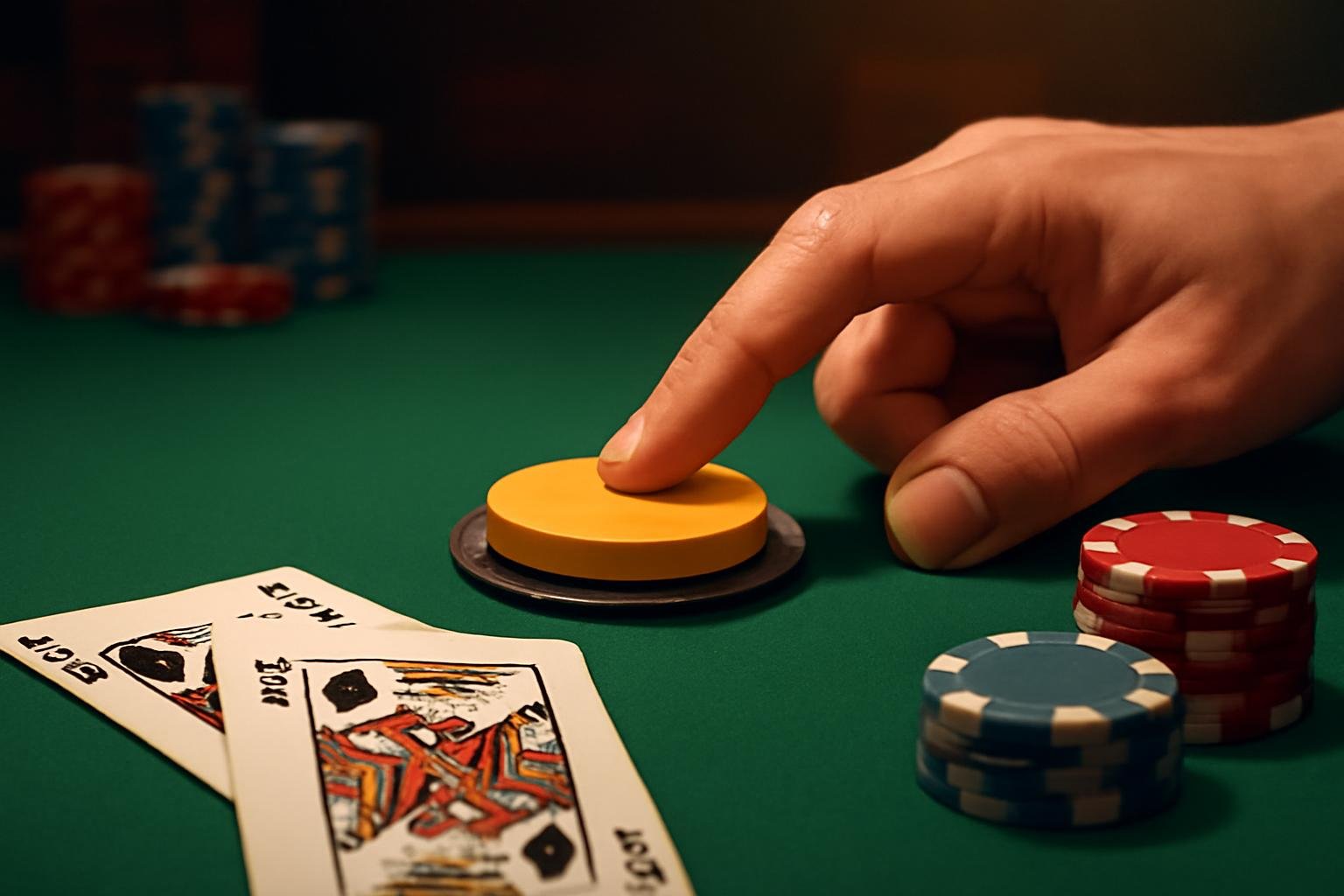
The button is the most advantageous seat in a Texas Hold’em hand because, after the flop, it usually acts last. That extra information can make decisions easier—but it does not mean you should play every hand or automatically bet whenever opponents check. A useful button strategy starts with a clear plan: choose hands with care before the flop, pay attention to who has shown strength, and use your position to make better-informed decisions on later streets.
Why the button changes a hand
In a standard hand, the dealer button marks the nominal dealer position. The small blind and big blind post forced bets, and action begins to their left before the flop. After the flop, action starts with the first active player to the left of the button. If you are still in the hand, you will generally act after the other players.
Acting later lets you see whether opponents check, bet, or raise before you decide. You can respond to that information rather than acting without knowing what they intend to do. Position does not reveal anyone’s cards, but it can help you make more informed choices about whether to check, bet, call, or fold.
Before the flop: open with a plan
If everyone has folded to you on the button, you can consider opening the pot with a raise. You only have the two blinds left to act, so there are fewer opponents to get through than when you raise from an earlier seat. Still, the blinds may defend, and a hand that looks playable can become awkward if you face a re-raise.
Before raising, ask yourself what you will do if a blind calls or re-raises. Stronger hands can continue more comfortably; marginal hands may need to be folded to substantial resistance. Your choices should also reflect the game’s format and the opponents’ tendencies, rather than follow a rigid rule that every button hand is worth playing.
If players have already entered the pot, do not treat the button as a reason to raise automatically. Consider how many opponents are involved, whether someone has raised, and how your hand performs when called. A raise can be useful with a hand that can continue after a call, while folding a weak holding can avoid a difficult multiway pot.
If you are still learning which hands are reasonable candidates, review the site’s guide to Texas Hold’em starting hands. Use it as a foundation, then account for position and what has happened in the hand.
After the flop: let the action inform you
When you have position after the flop, avoid deciding in advance that you must bet. First notice how the other players act. If the action checks to you, consider whether your hand can gain value from a call, whether a bet could make worse hands continue or stronger hands fold, and whether checking is the safer way to reach the next card.
Example: a modest pair on a quiet flop
Suppose you raised from the button, one blind called, and the flop arrives. Your opponent checks and you hold a small pair. A bet is not automatically correct. If your goal is to get called by weaker hands, think about whether those hands are likely to call. If you expect mainly better hands to continue, checking behind may keep the pot manageable and allow you to see another card.
The exact decision depends on the board, your opponent’s likely range, and the action so far. The point is to use your position to gather information and choose deliberately—not to treat a check as proof that your opponent has nothing.
Common button mistakes
- Playing too many hands: Position helps, but weak hands can still make difficult pairs and draws.
- Raising without a response plan: Decide what you will do if a blind calls or re-raises.
- Betting every time opponents check: A check can indicate many different hand strengths and intentions.
- Ignoring the players in the blinds: Their choices and tendencies affect how attractive an open raise is.
- Confusing position with certainty: Acting last provides information, not a guarantee of the best hand.
Practice a repeatable decision routine
For each button hand, use the same short checklist: What happened before the action reached me? Which players remain to act? If I raise, what will I do against a call or re-raise? After the flop, what does the action suggest, and what hands might call a bet? This routine keeps your decisions connected to the hand instead of to the label “button.”
You can rehearse the routine in a free practice game and review a few hands afterward. The guide to practising Texas Hold’em against bots explains how to make practice sessions more focused. For a refresher on betting order and the stages of a hand, see the step-by-step Texas Hold’em rules guide.
Takeaway: The button is valuable because you often get to act with more information. Use that advantage to make considered preflop choices and to respond to the action after the flop—not as a reason to play every hand or bet without a purpose.